ESCI 430 - Trace element and isotope geochemistry


Instructors:

Cin-Ty Lee (weeks 1-10,14)

            ctlee@rice.edu


            This course will introduce basic principles of trace-element and isotope geochemistry.  The course will cover basic atomic and nuclear structure, radiaoactive decay equations, trace-element partitioning, stable isotope fractionations, and measurement techniques.  Both high and low temperature geochemistry topics will be discussed.  These include trace-elements, stable isotopes, and radiogenic isotopes in solid earth differentiation processes, cosmochemistry, magmatic processes, geochronology, paleoclimate, paleo-oceanography, and geomorphology.  This course is designed for graduate students and advanced undergraduates.  Classes will meet twice a week (1.5 hrs/lecture).  Students are expected to complete a series of problem sets and to present brief oral summaries/critiques of a series of papers under a topic agreed upon with the instructor.


Grading scheme:

50 % Homework, quizzes, and class participation

            weekly homework

            weekly readings of papers

25 % Term Paper

25 % Oral presentation of term paper


Texts

Faure, Isotope: Principles and applications, 3rd edition

Albarede, Geochemistry: an Introduction

Lee, Lecture notes


Other useful texts

Albarede, F., 2002, “Introduction to geochemical modeling”, Cambridge University Press, ISBN 0521578043.

Albarede, F., 2003, “Geochemistry, an introduction”, Cambridge University Press, ISBN 0521891485.

Allegre, C. J., 1994, “From stone to star, a view of modern geology”, Harvard University Press, ISBN 067483867X

Criss, R. E., 1999, “Principles of stable isotope distribution”, Oxford University Press, 0195117751.

Dickin, A. P., 1997, “Radiogenic isotope geology”, Cambridge University Press, ISBN 0521598915.

Faure, G., 1997, “Principles and applications of geochemistry”, Prentice Hall, ISBN 0023364505.

Friedlander, G., Kennedy, J. W., Miller, J. M., 1955, “Nuclear and radiochemistry”, John Wiley and Sons.

Krane, K. S., 1987, “Introductory nuclear physics”, John Wiley and Sons, ISBN 047180553X.

Hoefs, J., 1997, “Stable isotope geochemistry”, Springer-Verlag, ISBN 3540611266.

Rollinson, H. R., 1993, “Using geochemical data: evaluation, interpretation, presentation”, Longman Group, ISBN 0582067014.


Syllabus

Week 1a. Lecture 1  AUG 28

Introduction to basic atomic and nuclear structure

Overview of terrestrial and planetary geochemistry, petrology, and evolution

Faure Ch. 1-2

Lee Lecture Notes (Chapter 1. Introduction to the Earth)

Lee Lecture Notes (Chapter 2. Making the Earth)

Homework

Week 1b. Lecture 1b AUG 30

            How old is the Earth?  How old are you? 

Brief introduction to radioactive dating

            Outline of assumptions in radioactive dating

            Faure Ch. 4

            Lee Lecture Notes (Chapter 2A. Nuclear structure & Chapter 3A. Radioactive Decay)

            Nuclide mass chart


Week 2a. Lecture 2a SEP 4

            Review of the periodic table

            Cosmic abundances of elements and isotopes

            Compositions of various reservoirs on Earth (core, mantle, crust, ocean, atmosphere)

            Lee Lecture Notes

Week 2b, SEP 6 (LEE AWAY- MBARI-PACKARD)

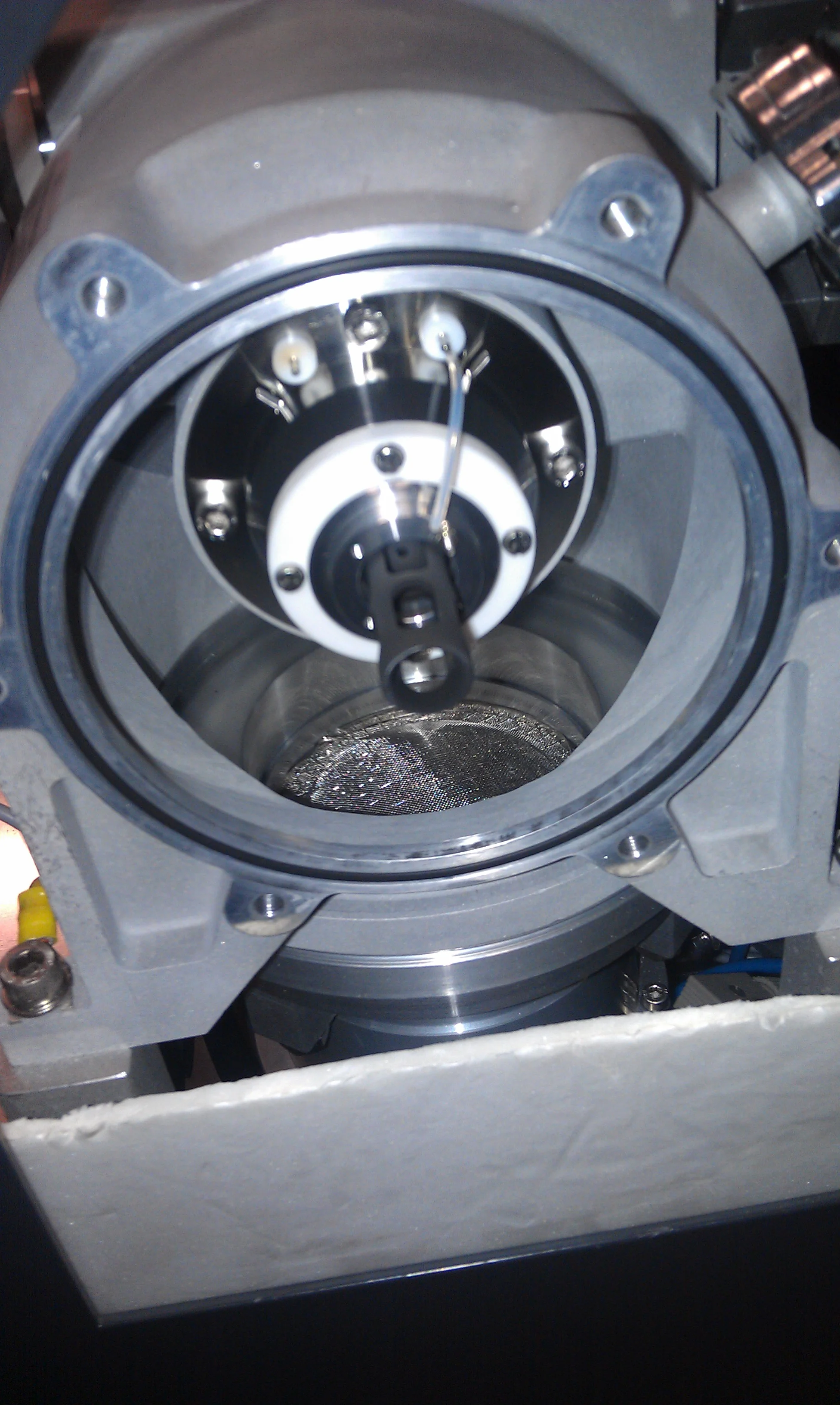
            Tour of mass spectrometry laboratory


Week 3a. Lecture 2b SEP 11

            Nuclear structure in more detail

            Nucleosynthesis and origin of solar system; making the building blocks

            Lee Lecture Notes  (Chapter 2A. Nuclear structure)

Week 3b. Lecture 3a SEP 13

            Distribution and re-distribution of elements during chemical, petrological processes (Chapter 7)

            Introduction to petrology and mineralogy (Chapter 2 and 3)

            Introduction to the physical and chemical processes by which Earth differentiates

            Equilibrium partition coefficients

            Homework 2


Week 4a. SEP 18

            Towards a physical understanding of trace element partitioning.

Week 4b. SEP 20

            Simple box models of melting, mixing

            Implications for interpretation of mid-ocean ridge melting

            Fractional crystallization

            Interpretation of igneous rocks

Week 5a SEP 25 (LEE AWAY - HARVARD)

            IN CLASS QUIZ

Week 5b SEP 27 (Shuster visit)

            Radioactive dating in more detail

            Examples from Rb-Sr, Sm-Nd, C14, U-Th-seriesU-Pb geochronology

            Dating the age of the Earth

Week 6a OCT 2

            Age of the solar system

            Brief overview of early solar system processes

            Short-lived isotopes

Week 6b OCT 4

            Chemical differentiation of the Earth

Week 7a OCT 9

            Crust formation through time

            Mantle geochemistry

Week 7b  OCT 11

            Isotopic tools in understanding tectonics and/or surface processes
            Thermochronology

            K-Ar, Ar-Ar, Fission Track, U-Th-He

Week 8a OCT 16 (MIDTERM RECESS)

Week 8b OCT 18 (Wang visit)

            Short-lived isotopes (U-Th series) for dating magma ascent rates

Week 9a OCT 23

            Stable isotopes

Week 9b OCT 25 (LEE AWAY - CALIFORNIA)

            QUIZ

Week 10a OCT 30

            Stable isotope in climate, paleo-oceanography

Week 10b NOV 1

            Stable isotope biogeochemistry

Week 11a NOV 6

            Global Carbon Cycle

Week 11b NOV 8 (LEE AWAY – U ARIZONA)

            QUIZ

Week 12a NOV 13

            When did life begin?

Week 12b NOV 15 (LEE AWAY-BERKELEY)

            Guest lecture

Week 13a NOV 20

            Dating sediments;  U-Th series in corals, C14, etc.

Week 13b NOV 22

            Sulfur isotopes

Week 14a NOV 27

            Oral presentations

Week 14b NOV 29

            Oral presentations